Dossiê "Drogas, Moralidade e Políticas Públicas: diferenças e convergências das experiências brasileira e portuguesa"
Drugs, Morality, and Public Policies: Differences and Convergences between the Brazilian and Portuguese Experiences
Editors: Paulo Fraga (UFJF), Ximene Rego (University of Porto), Jorge Quintas (University of Porto), and Luiz Cláudio Lourenço (UFBA)
The journal Teoria e Cultura invites the academic community to submit original articles to the thematic dossier “Drugs, Moralities and Public Policies: Differences and Convergences between the Brazilian and Portuguese Experiences.”
PresentationIllicit psychoactive substances occupy a critical point of convergence between public health, legal frameworks, state policies, and the dynamics of class, space, gender, and race. Far from being essentialist entities, their sociological relevance lies in the reactions and meanings they generate among a wide variety of actors and systems (Pin, 1972). This phenomenon requires an interdisciplinary lens that articulates knowledge from Criminology, Sociology, Anthropology, Psychology, Law, and Social Work, under the broader framework of Human Rights (Bergeron, 2009).
This dossier seeks to analyze the tensions between the urgency of evidence-based approaches and the persistence of punitive biases. In the Brazilian context, although the paradigm of Risk Reduction and Harm Minimization (RRHM) and alternative sentencing represent important advances, the reality of mass incarceration—predominantly affecting young Black men and women from peripheral urban areas (Fraga, 2012)—reveals profound contradictions. At the same time, international experiences, such as Portugal’s model of drug decriminalization, offer fertile ground for comparative studies on the limits of regulation, access to medical cannabis, and institutional resistance to the agency of people who use drugs.
Suggested Thematic AxesWe welcome contributions engaging with the following topics, from national or comparative perspectives:
Regulation and Behavior
Impacts of drug control policies on social, spatial, and individual dynamics.
Cannabis and Society
Debates on medical access, home cultivation, and regulatory barriers.
Human Rights and Vulnerabilities
The impact of drug policies on historically marginalized populations.
Legislative and Jurisprudential Reforms
Analysis of recent changes in national legislation and their practical effects.
Health and Care
The harm reduction paradigm in relation to abstinence-based policies.
Submission Deadline:
March 15, 2026 – May 15, 2026
Formatting:
Manuscripts must follow the guidelines and section policies of the journal Teoria e Cultura (available here: Submissões | Teoria e Cultura).
Languages:
Submissions will be accepted in Portuguese, French, Spanish, and English.
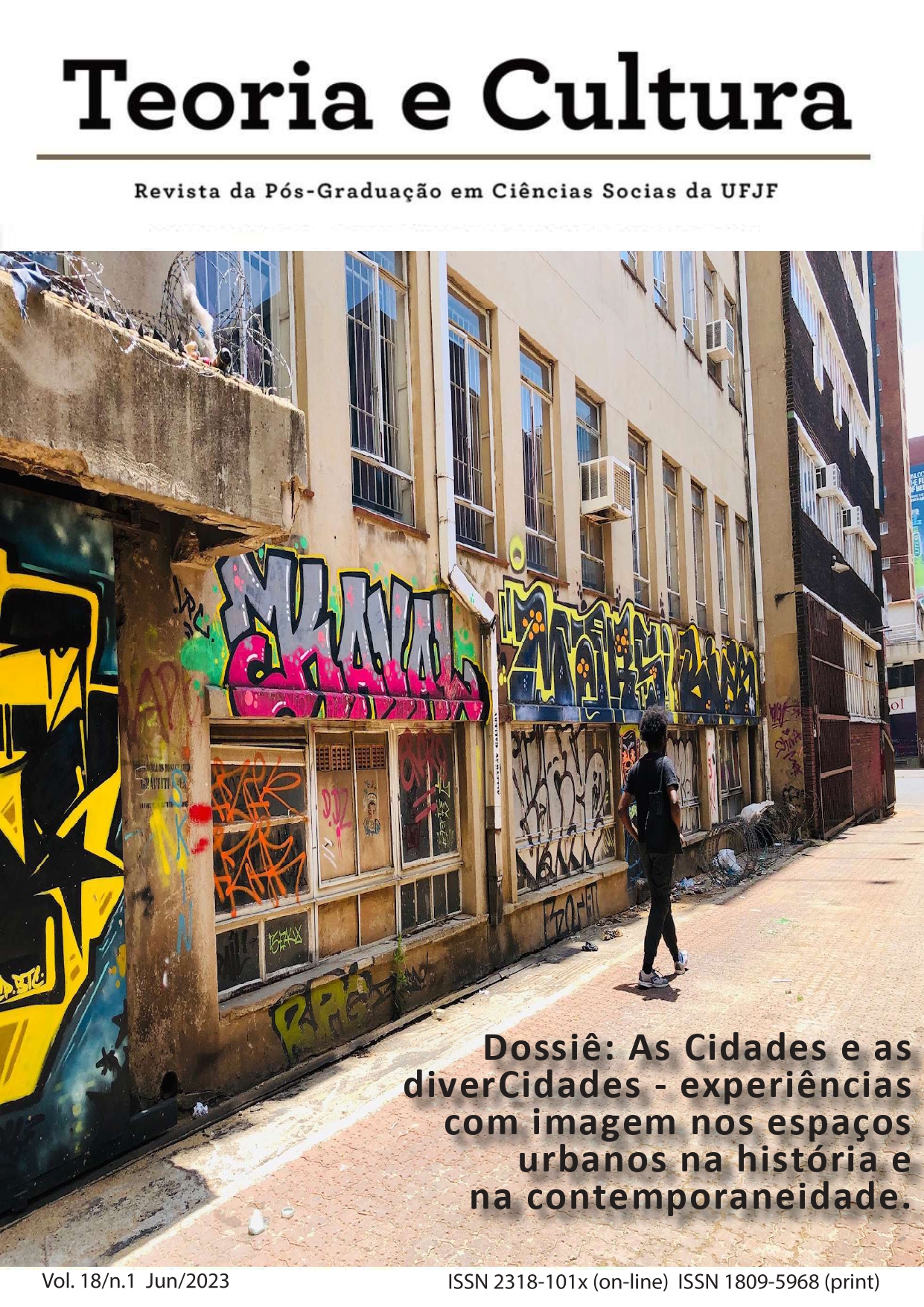 O volume 18, número 1, da Revista Teoria e Cultura aborda o tema instigante da produção imagética e sua contribuição para o processo de formação das cidades. A coletânea apresenta elementos para uma reflexão original e ampliada sobre o espaço urbano. Organizado por Caterine Reginensi (UENF), Mariana Cunha Pereira (UFRR) e Rubia-Mar Nunes Pinto (UFG) o dossiê As Cidades e as diverCidades – experiências com imagens nos espaços urbanos na história e na contemporaneidade se constitui como uma oportunidade ímpar para compreender aspectos antropológicos e sociológicos da relação entre espaço, cidade, artes, memória e cultura. Na seção Artigos, do fluxo contínuo da revista, quatro excelentes contribuições compõem esta edição: um artigo sobre a relação entre ontologias e esquerda na Antropologia, um debate sobre o fazer etnográfico durante a pandemia, uma análise etnográfica sobre a construção de subjetividades nas redes sociais e, por fim, uma discussão sobre o conceito de realismo capitalista na obra de Mark Fisher. Contamos também com uma ótima resenha da obra de John Dryzek e Jonathan Pickering, The politics of the Anthropocene. Aproveito para dar muito boas-vindas a nosso assistente editorial Juliano Dias Guimarães. Desejamos a todes uma excelente leitura.