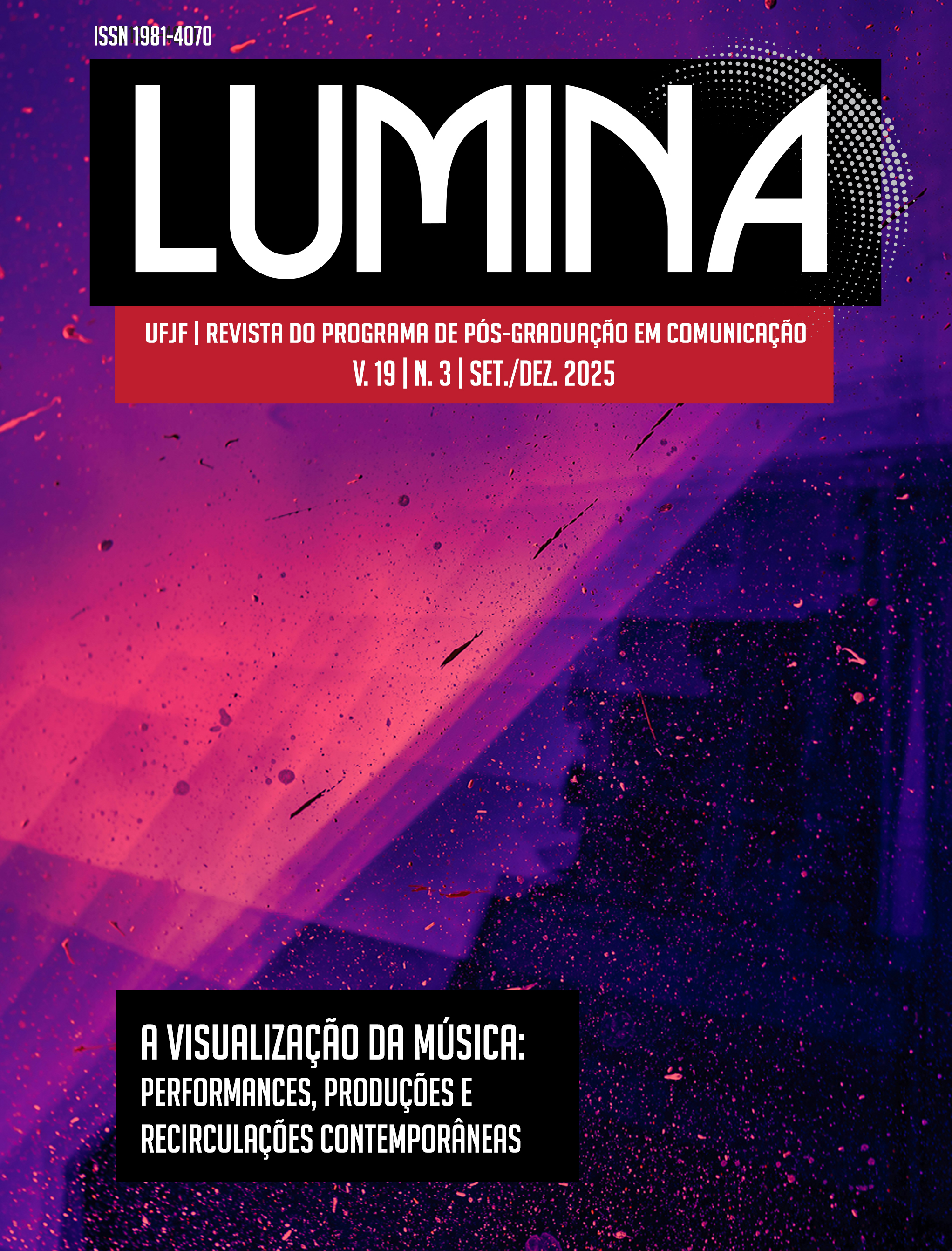
The sound of adventure: the role of the song ‘We Are!’ in visualizing the anime One Piece
DOI:
https://doi.org/10.34019/1981-4070.2025.v19.50165Keywords:
Anime, Japanese pop culture, Theme music, Music video, AnisongAbstract
In the context of Japanese pop culture, anisongs (anime theme songs) play a fundamental role as opening and ending themes of animations. Recognizing the importance of these songs, this article aims to analyze their contributions to the visualization of the anime One Piece, through a case study focused on the series' first opening theme: We Are!. Based on discussions of music videos (Soares, 2004) and film music (Gorbman, 1987), deepened by the listening modes proposed by Chion (2011) and Carvalho (2007), this paper investigates how the articulation between sound, lyrics, and the accompanying animated sequence occurs. It is concluded that the song acts as a powerful visualization device, creating a soundscape that is harmonious with the work's plot. This connection establishes a symbiotic relationship between the anisong and the anime, synthesizing the narrative's energy in the opening and signaling to the viewer the tone of what is to be watched. It is also noted that the sonority of We Are! reverberates throughout the more than two decades of One Piece's exhibition, being fundamental to the consolidation of the franchise's sonic identity.
Downloads
References
AMARAL, A.; DUARTE, R. F. R. A Subcultura Cosplay no Orkut: comunicação e sociabilidade online e offline. In: BORELLI, S.; FREIRE FILHO, J. (Org.). Culturas juvenis no século XXI. São Paulo: EDUC, 2008, p. 269-288.
ARAKAKI, M. Adaptações culturais entre falantes da língua inglesa e japonesa através da música. In: JORNADA NACIONAL DE ESTUDOS LINGUÍSTICOS, 20., 2004, João Pessoa. Anais [...]. João Pessoa: Ideia, 2004. p. 1545-1550.
BILLBOARD JAPAN. Hiroshi Kitadani on his history with ‘One Piece’ TV anime & his work as ‘We Are!’ pirates: Interview. Billboard, 23 mar. 2024. Disponível em: https://sl1nk.com/4Uqta. Acesso em: 5 set. 2025.
CARVALHO, M. A trilha sonora do Cinema: proposta para um “ouvir” analítico. Caligrama (São Paulo. Online), São Paulo, v. 3, n. 1, p. 1-15, abr. 2007.
CHION, M. A Audiovisão: Som e Imagem no Cinema. Lisboa: Edições Texto & Grafia, 2011, 176 p.
DUARTE, M. Y. M. Estudo de caso. In: DUARTE, J.; BARROS, A. (Org.). Métodos e técnicas de pesquisa em Comunicação. São Paulo: Atlas, 2008, p. 215- 235.
FARIA, J. L. C. S. As músicas das aberturas dos animes: um estudo sobre as influências em seu processo de escolha. 2014. 15 f. Trabalho de Conclusão de Curso (Graduação em Música) – Centro Universitário Metodista Izabela Hendrix, Belo Horizonte, 2014.
FERREIRAZ, O. Mangá de One Piece registra recorde mundial no Guinness Book. IGN Brasil, 4 ago. 2022. Disponível em: https://sl1nk.com/7OjeK Acesso em: 5 set. 2025.
GORBMAN, C. Unheard Melodies: narrative film music. Bloomington & Indianapolis: Indiana University Press, 1987, 190 p.
GREEN, L. From score to song: the rise of the 'star composer' and the role of music in contemporary anime. 2021. 225 f. Tese (Doutorado) – Centre For Creative Industries, Media And Screen Studies, University Of London, London, 2022.
HOLZBACH, A. D. Smells Like Teen Spirit: a consolidação do videoclipe como gênero áudio-visual. 2013. 326 f. Tese (Doutorado em Comunicação) – Universidade Federal Fluminense, Niterói, 2013.
JENKINS, Henry. Cultura da convergência. São Paulo: Aleph, 2013. 478 p. Tradução de Susana Alexandria.
MUGIWARAS OFICIAL. Capítulo 488. Mugiwaras Oficial, 2025. Disponível em: https://mugiwarasoficial.com/manga/manga-one-piece/capitulo-488/. Acesso em: 5 set. 2025.
NAGADO, A. O mangá no contexto da cultura pop japonesa e universal. In: LUYTEN, S. M. B. (Org.). Cultura pop japonesa. São Paulo: Hedra, 2005, p. 49-57.
NAGADO, A. Almanaque da Cultura Pop Japonesa. São Paulo: Via Lettera, 2007, 224 p.
NAZARÉ, T. The Anime Sound: an analytical and semiotic study of contemporary anime music. 2023. 122 f. Dissertação (Mestrado) –Music Research, Music Theory, McGill University, Montréal, 2023.
ONE PIECE episode 1000 full special opening comparison. YouTube, 20 nov. 2021. Disponível em: https://www.youtube.com/watch?v=ec5DQDP5FaA. Acesso em: 5 set. 2025.
ONE PIECE. We Are! (tradução). Vagalume, [2025]. Disponível em: https://www.vagalume.com.br/one-piece/we-arei-traducao.html. Acesso em: 15 jan. 2025.
PETERS, M. An Anime Ranked as the Most-Watched TV Show in 2022, Says New Report. ComicBook, 4 jan. 2023. Disponível em: https://l1nq.com/GoekB. Acesso em: 5 set. 2025.
SEVAKIS, J. Answerman: How Are Anime Opening And Ending Themes Chosen?. Anime News Network, 31 maio 2017. Disponível em: https://sl1nk.com/6V0ae. Acesso em: 8 mar. 2025.
SILVEIRA, D. T.; CÓRDOVA, F. P. A pesquisa científica. In: GERHARDT, T. E.; SILVEIRA, D. T. (Org.). Métodos de pesquisa. Porto Alegre: Editora da Ufrgs, 2009, p. 31-42.
SOARES, T. Videoclipe: o elogio da desarmonia. Recife: Livrorapido, 2004, 102 p.
SOARES, T. A Estética do Videoclipe. João Pessoa: Editora da UFPB, 2013, 306 p.
SPOTIFY. Big In Japan: How Anime Has Helped Japanese Music Go Global. Spotify, 20 nov. 2018. Disponível em: https://acesse.one/ZFhMa . Acesso em: 15 jan. 2025.
THIS ONE Piece Opening Theme Is A MASTERPIECE. Publicado pelo canal Charles Cornell. [S. l.], 27 nov. 2023. 1 vídeo (13min. 22seg.). Disponível em: https://l1nq.com/PKmyt. Acesso em: 15 jan. 2025.
ZUMTHOR, P. Performance, recepção, leitura. 2 ed. São Paulo: Cosac & Naify, 2012, 126 p.
Published
How to Cite
Issue
Section
License
Autores que publicam nesta revista concordam com os seguintes termos:
- Autores mantém os direitos autorais e concedem à revista o direito de primeira publicação, com o trabalho simultaneamente licenciado sob a Licença Creative Commons Attribution que permite o compartilhamento do trabalho com reconhecimento da autoria e publicação inicial nesta revista.
- Autores têm autorização para assumir contratos adicionais separadamente, para distribuição não-exclusiva da versão do trabalho publicada nesta revista (ex.: publicar em repositório institucional ou como capítulo de livro), com reconhecimento de autoria e publicação inicial nesta revista.
- Autores têm permissão e são estimulados a publicar e distribuir seu trabalho online (ex.: em repositórios institucionais ou na sua página pessoal) a qualquer ponto antes ou durante o processo editorial, já que isso pode gerar alterações produtivas, bem como aumentar o impacto e a citação do trabalho publicado (Veja O Efeito do Acesso Livre).