
Law and Criminality in World War II : Military Justice and the Soldiers of the FEB
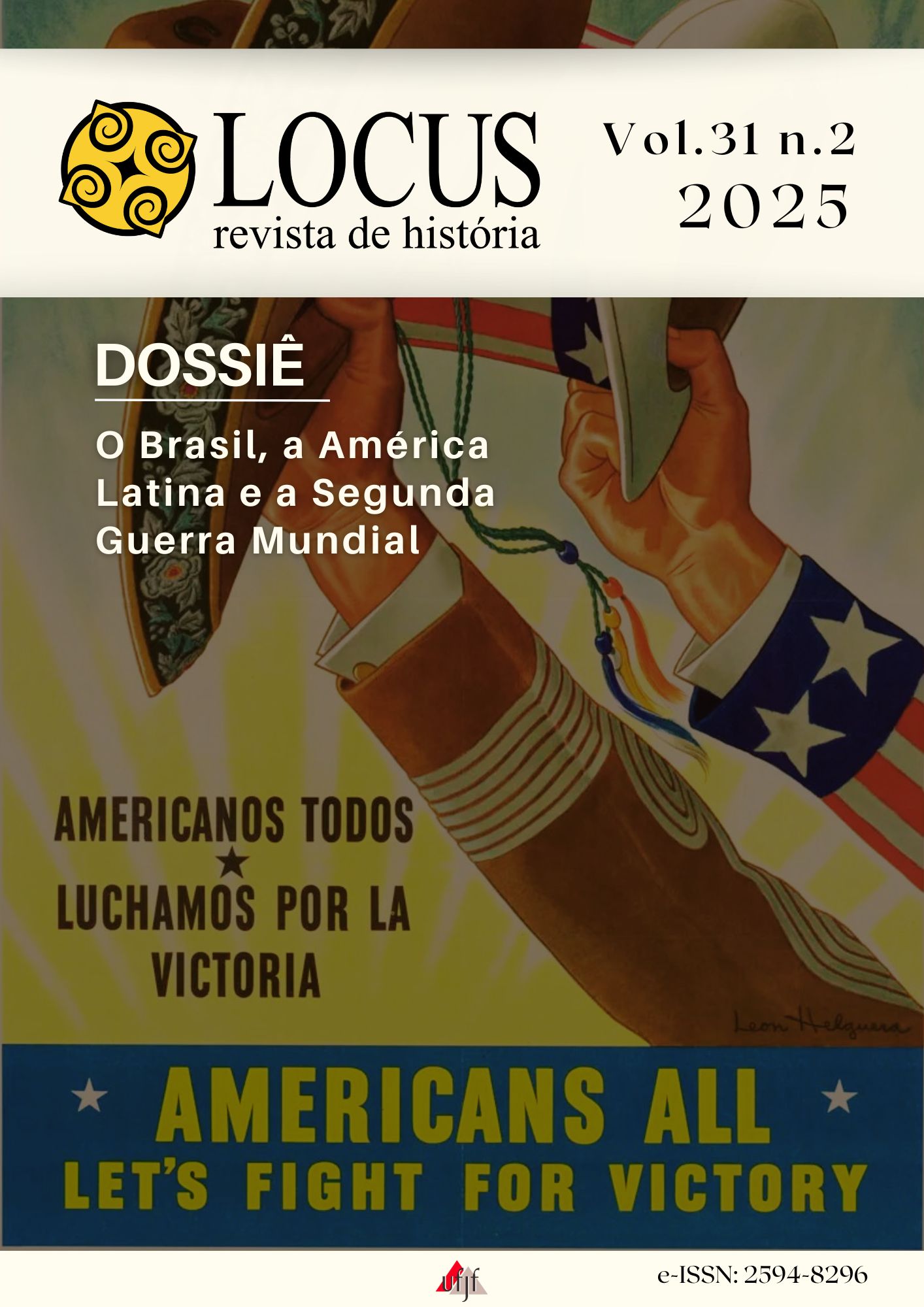
Published 2026-01-10
Keywords
- Força Expedicionária Brasileira,
- Military Justice,
- Army soldiers,
- criminal proceeding,
- World War II
How to Cite
Copyright (c) 2026 Fernando da Silva Rodrigues, Adriana Gomes

This work is licensed under a Creative Commons Attribution 4.0 International License.
Abstract
This article aims to analyze the role of the Brazilian Military Justice system during the participation of the Brazilian Expeditionary Force (FEB) in World War II, with an emphasis on crimes committed by Brazilian soldiers on Italian soil between 1944 and 1945. The investigation seeks to understand the legal, institutional, and symbolic ramifications of these judicial proceedings, taking into account the interaction between the Brazilian legal system, the daily routine of the troops in Italy, the operational integration with the United States Army, and the challenges of applying military law in an international wartime context. The methodology is based on qualitative analysis of primary sources, with particular emphasis on the dossier Complaints of Italian Civilians through the American Army, consisting of 103 pages preserved in the Historical Archive of the Brazilian Army. Additional documentary series from the FEB and the Military Justice system, covering the period from 1942 to 1945, were also examined. The interpretative approach follows the assumptions of the New Military History, combining technical-legal analysis with a hermeneutic reading of the sources. Judicial proceedings are treated as discursive and polyphonic constructions that reveal power tensions, disputes over meaning, and institutional strategies of silencing or containment. In the discussion, the article examines Military Justice not only as an instrument of punishment, but also as a mechanism for symbolically preserving the image of the FEB abroad. Noteworthy cases of rape, homicide, bodily harm, and looting committed by Brazilian soldiers—particularly outside the battlefield—are identified, with special attention given to the Madognana episode (January 1945), in which two soldiers sentenced to death had their penalties commuted through successive institutional decisions. Such practices highlight the fragility of effective accountability and the political use of clemency instruments such as postwar pardons and commutations. The findings indicate that the actions of the Military Justice system were marked by selective punishment, diplomatic tensions with the United States Army, logistical challenges, and operational limitations in the European theater. The research also reveals that the mobilization and structuring of the FEB were impacted by problems in recruitment, training, and discipline, which contributed to high rates of indiscipline and criminal behavior among the troops. By shedding light on the functioning of the Military Justice system within the FEB context, the article helps fill a historiographical gap by addressing the legal, moral, and symbolic dimensions of the Brazilian military experience in World War II. The critical analysis of criminal proceedings demonstrates how legal narratives can serve as complex and essential historical sources for understanding the relationships between war, justice, power, and memory. In doing so, the research contributes to contemporary debates on the role of the Armed Forces and reaffirms historiography’s commitment to a critical and plural reconstruction of Brazil’s military past.
Downloads
References
- Albuquerque, Bento Costa Lima Leite de. A justiça militar na campanha da Itália: constituição, legislação, decisões, Brasília: Superior Tribunal Militar, 1958.
- Albuquerque Júnior, Durval Muniz. A dimensão retórica da historiografia. In. Pinsky, Carla Bassanezi (Org.). O historiador e suas fontes, São Paulo: Contexto, 2009.
- Barros, José D’Assunção. O Campo Histórico: as especialidades e a abordagem da História, 1ª ed., Rio de Janeiro: Editora Cela, 2002.
- Blajberg, Israel. 1942 – Um ano singular: os 75 anos dos torpedeamentos e da entrada do Brasil na Segunda Guerra Mundial. In: Rodrigues, Fernando; Silva, Francisco Carlos Teixeira da; Pitillo, João Cláudio Platernik (org.). Guerra, cultura e política: novos estudos sobre o Brasil na Segunda Guerra Mundial, Rio de Janeiro: Conexão 7, 2021.
- Bloch, Marc. Apologia da História ou o Ofício de Historiador. Edição anotada por Étienne Bloch. Tradução André Telles, Rio de Janeiro: Zahar, 2001, p. 68.
- Bueno, Almir de Carvalho. Processos-Crime e micro-história. Perspectivas e limitações em um estudo de caso. Mneme – Revista de humanidades, Caicó, v. 14, n. 32, p. 1-12, 2003.
- Campiani, Cesar. Barbudos, sujos e fatigados, São Paulo: GRUA, 2010.
- Carneiro, Mario Tiburcio Gomes. As leis da guerra - Convenções Internacionais. Rio de Janeiro: Gabinete Fotocartografico do Ministério da Guerra, 1943.
- Chalhoub, Sidney. Trabalho, lar e botequim: o cotidiano dos trabalhadores do Rio de Janeiro na Belle Epoque. São Paulo: Brasiliense, 2001.
- DEYRA, Michel. Direito Internacional Humanitário, Brasília: Procuradoria Geral da República, 1998.
- Castro, Celso; Izecksohn, Vitor; e Kraay, Hendrik (Org.). Nova História Militar Brasileira, Rio de Janeiro: FGV/ Bom Texto, 2004.
- Clausewitz, Carl Von. Da Guerra, Tradução para o inglês por Michael Howard e Peter Paret; trad. do inglês para o português por CMG (RRm) Luiz Carlos Nascimento e Silva do Valle; ensaios introdutórios. de Peter Paret, Michael Howard e Bernard Brodie, com um comentário de Bernard Brodie. S./d.
- Fausto, Boris. Crime e Cotidiano. A criminalidade em São Paulo (1880-1924). São Paulo: Brasiliense, 1984.
- Ferrajoli, Luigi. Direito e razão: teoria do garantismo penal. São Paulo: Editora Revista dos Tribunais, 2002.
- Ferraz, Francisco César Alves. A guerra que não acabou: a reintegração social dos veteranos da Força Expedicionária Brasileira (1945-2000), Londrina: EdUEL, 2012.
- Ferreira Junior, Alcemar. Uma visceral rebeldia: clientelismo e isenções no recrutamento da Força Expedicionária Brasileira (1943-1944). In: SANTOS, Cláudia R. Andrade dos (et al.), Estudos – vol. II - Série Grupo de Pesquisa LEPH/Programa de Mestrado em História Social/Universidade Severino Sombra, Curitiba, 2007.
- Latfalla, Giovani. Relações Militares: Brasil-EUA 1939/1943, Rio de Janeiro: Gramma Editora, 2019.
- Laport, William. Justiça Expedicionária Brasileira: atuação no Teatro de Guerra da Itália (1944-1945), Brasília: UnB, 2017, http://www.realp.unb.br/jspui/handle/10482/22624. Acesso em 30 mai. 2024.
- Ginzburg, Carlo. O inquisidor como antropólogo: uma analogia e as suas implicações. In: Ginzburg, Carlo; Castelnuovo, Enrico; Pono, Carlo. A micro-história e outros ensaios. Rio de Janeiro; Bertrand Brasil, 1991.
- Ginzburg, Carlo. Relações de Força: história, retórica, prova. São Paulo: Companhia das Letras, 2002.
- Gomes Neto, Paulo; Silva, Francisco Carlos Teixeira da; Pitillo, João Cláudio Platernik (org.). A Segunda Guerra Mundial 70 anos depois... (Coletânea de Artigos), Rio de Janeiro: Multifoco, 2016.
- Pedrosa, Fernando Velôzo Gomes. Por Uma História Militar Global: da História Militar tradicional à Nova História Militar, Revista Brasileira de História Militar, Ano X, n.º 25, mai. 2019, p. 8. Disponível em: https://www.historiamilitar.com.br/edicao/edicao-25-ano-x-maio-de-2019/ Acesso em 02 jun. 2024.
- Oliveira, Dennison. Aliança Brasil-Estados Unidos: nova história do Brasil na Segunda Guerra Mundial, Curitiba: Juruá, 2015.
- Reis, José. Carlos. A história entre a filosofia e a ciência, São Paulo: Editora Ática, 1996.
- Rodrigues, Fernando; Silva, Francisco Carlos Teixeira da; Pitillo, João Cláudio Platernik (org.). Guerra, cultura e política: novos estudos sobre o Brasil na Segunda Guerra Mundial, Rio de Janeiro: Conexão 7, 2021.
- Rodrigues, Fernando. Os indesejáveis: Instituição, Pensamento Político e Formação Profissional dos Oficiais do Exército Brasileiro (1905 a 1946), Jundiaí: Paco Editorial, 2013.
- Rodrigues, Fernando da Silva. Desafios históricos para organização, preparação e emprego da Força Expedicionária Brasileira na Segunda Guerra Mundial, Revista Artigos Estratégicos. Vol. 5 n. 2 Jul/Dez 2018. Disponível em: http://ebrevistas.eb.mil.br/index.php/CEEExArE/article/view/2098. Acesso em 30 mai. 2024.
- Rosemberg, André; Souza, Luís Antônio Francisco de. Notas sobre o uso de documentos judiciais e policiais como fonte de pesquisa histórica. Revista Patrimônio e Memória, Assis, v. 5, n. 2, p. 159-173, 2009.
- Sanches, Marcos Guimarães. A guerra: problemas e desafios do campo da história militar brasileira, Revista Brasileira de História Militar, Rio de Janeiro, Ano I, n. 1, p. 6-16, abril 2010, p. 6. Disponível em: http://www.historiamilitar.com.br/wp-content/uploads/2017/08/RBHM-I-01.pdf Acesso em 21 jun. 2024.
- Soares, Luiz Carlos. História Militar: a “velha” e a “nova”. In: Cardoso, Ciro Flamarion Santana; Vainfas, Ronaldo. Novos domínios da história, Rio de Janeiro: Elsevier, 2012.
- Teixeira, Nuno Severiano. A história militar e a historiografia contemporânea, A Defesa Nacional, 81 (768), 2021, pp. 194-196. Disponível em https://ebrevistas.eb.mil.br/ADN/article/view/7057. Acesso em 21 jun. 2024.