Bergson and Freedom as an Expression of Life
Keywords:
Bergson, Liberdade, Expressão, VidaAbstract
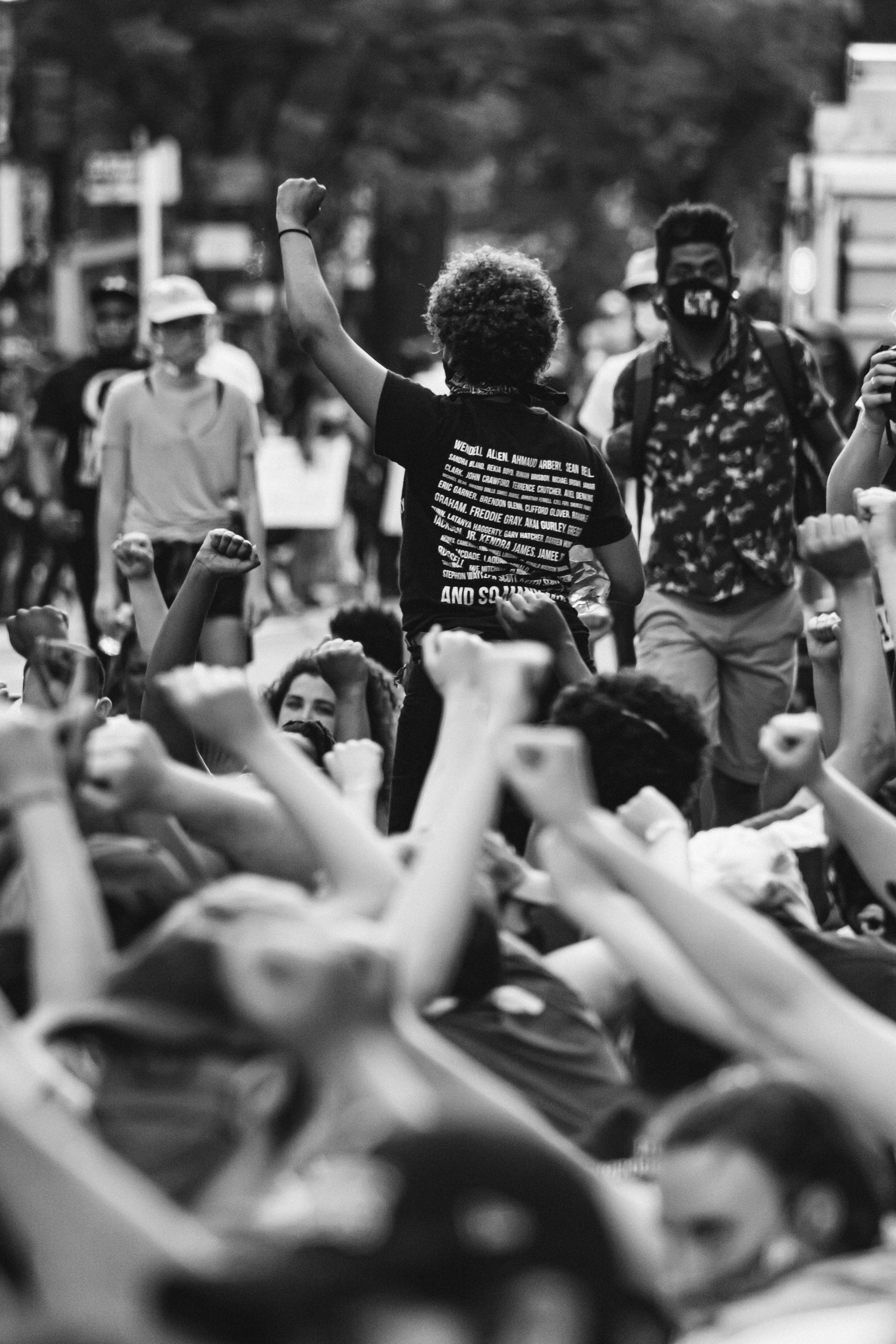
Discussing freedom of expression and democracy in Bergson's work may seem a risky undertaking, since the author did not directly address the subject, in modern political terms, as a right associated with a form of government. However, his work provides us with multiple opportunities to think about these issues. In The Two Sources of Morality and Religion (1932), Bergson distinguishes between closed and open societies. While the former is characterized by fixed rules and motivated by the instinct for self-preservation, the latter is linked to a morality that includes all of humanity and has as its condition and principle an universal love. It presents itself as a social organization that allows freedom and welcomes individuality. In an open society, we have the possibility of a living democracy, which is constantly being created, driven by individuals who act from their inner selves, freely expressing their identity. According to Stull (2022), for Bergson, democracy is an “event,” an emergence of ethical and political potentialities that do not manifest themselves in other political systems. Democracy itself, in accordance with Bergsonian ontology, is a creative process, associated with freedom, as an expression of the deep self. Freedom is, in effect, conceived by Bergson as the inner expression of life in its fullness. In the Essay on the Immediate Data of Consciousness (1889), freedom is presented as the act of the deep self, which occurs in duration. This freedom, says Sinclair (2021), is expressive, just like the creation of a work of art, which manifests the interiority of the subject. Nagase suggests that freedom, at the same time, implies a responsibility, forming what Bergson calls, in Matter and Memory (1896), a “reasonable freedom.” The profound question, states Pommier (2010), is embodiment, as well as our relationship with the world. Only intuition can produce harmony between action and inner life. Democracy aims to allow this expression to occur freely, but within institutional frameworks. Freedom is a vital force, an expression of life, as Bergson shows in Creative Evolution (1907). It manifests itself in all realities, whether human or natural. For human beings, democracy represents the political system that allows creativity and freedom within an institutional framework that organizes social life in such a way that the freedom of some does not become a threat to the freedom of others. It is this complex problem that we intend to analyze.
Downloads
References
AZOUVI, François. La gloire de Bergson. Essai sur le magistère philosophique. Paris: Gallimard, 2007.
BELOT, Gustave. « Une théorie nouvelle de la liberté ». Revue philosophique de la France et de la l’étranger XXX: 361-392, 1890.
BERGSON, Henri. Essai sur les données immédiates de la conscience. Édition critique dirigée par Frédéric Worms. Paris : Presses Universitaires de France, coll. Quadrige, 2007a.
__________. Matière et mémoire : essai sur la relation du corps à l'esprit. Éd. critique par Frédéric Worms. Paris : Presses Universitaires de France, coll. Quadrige, 2008a.
__________. L’Évolution créatrice. Paris : Presses Universitaires de France, coll. Quadrige, 2007b.
__________. Les Deux sources de la morale et de la religion. Paris : Presses Universitaires de France, 2008b.
__________. La Pensée et le mouvant. Paris : Presses Universitaires de France, 2013.
__________. Histoire de l’idée de temps. Cours de 1902-03. Paris : Presses Universitaires de France, 2016.
__________. L’Évolution du problème de la liberté. Cours au Collège de France 1904-05. Paris : Presses Universitaires de France, 2017.
__________. Cartas, conferências e outros escritos. São Paulo: Abril Cultural, 1984.
__________. Oeuvres. Édition du Centenaire. 5ème édition. Paris: P.U.F., 1991.
__________. Mélanges. Paris : P.U.F., 1972.
__________. Spinoza. In: Imagens da imanência: escritos em memória de H. Bergson. Organizado por Eric Lecerf, Siomara Borba e Walter Kohan. Belo Horizonte: Autêntica, 2007c.
__________. Freedom: Lectures at the Collège de France, 1904-1905. Edited by Nils F. Schott & Alexandre Lefebvre. Translated by Leonard Lawlor. London-New York: Bloomsbury, 2024.
__________. Cours. II, Leçons d'esthétique : à Clermont-Ferrand, Leçons de morale, psychologie et métaphysique : au lycée Henri-IV. Edition par Henri Hude, avec la collaboration de Jean-Louis Dumas. Paris: Presses Universitaires de France/« Epiméthée », 1992.
BOUTROUX, Émile. De la contingence des lois de la nature. Paris : Félix Alcan, 1898.
DESCARTES, René. Discours de la méthode. Présentation, notes, dossier, bibliographie et chronologie par Laurence Renault. Paris: Flammarion, 2000.
FOUCAULT, Michel, Le courage de la vérité: le gouvernement de soi et des autres II: cours au Collège de France (1983-1984), Gallimard, Seuil, Paris, 2009.
HEIDEGGER, Martin. Sein und Zeit. Tübingen : Max Niemeyer, 1984.
LÉVY-BRÜHL, Lucien. « Analyses et comptes rendus ». Revue philosophique de la France et de l’étranger XXIX: 519-538, 1890.
LIJPHART, Arend, Modelos de democracia, Civilização Brasileira, Riode Janeiro, 2019.
NAGASE, Masae. La liberté bergsonienne et la responsabilité. Meta: Research in Hermeneutics, Phenomenology, and Practical Philosophy, Iaşi, v. 3, n. 2, p. 461–483, 2011. Disponível em: http://www.metajournal.org/articles_pdf/461-483-nagase-meta_2011.pdf. Acesso em: 30 jun. 2025.
NIETZSCHE, Friedrich. Humano, demasiado humano. Tradução, notas e posfácio de Paulo César de Souza. São Paulo: Companhia das Letras, 2005.
POMMIER, Éric. La résolution du problème de la liberté dans l’Essai sur les données immédiates de la conscience de Bergson. Klēsis – Revue philosophique, n. 18, 2011. Disponível em: https://www.revue-klesis.org/pdf/Klesis-2011-3-Libert%C3%A9-Pommier.pdf. Acesso em: 30 jun. 2025.
POMMIER, Éric. Le sens de la liberté chez Bergson. Cahiers Philosophiques, Paris, n. 122, p. 57–88, 2010. Disponível em: https://shs.cairn.info/revue-cahiers-philosophiques1-2010-2-page-57.htm. Acesso em: 30 jun. 2025.
ROMEYER, Blaise. La liberté humaine d’après Henri Bergson. Revue Néo-Scolastique de Philosophie, Bruxelles, v. 35, n. 38, p. 190–219, 1933. Disponível em: https://www.persee.fr/doc/phlou_0776-555x_1933_num_35_38_2793. Acesso em: 30 jun. 2025.
ROUSSEAU, Jean-Jacques. Du Contrat Social, Garnier-Flammarion, Paris, 1966.
SANTOS PINTO, Tarcísio; QUINTILIANO, Aimberê. Henri Bergson - O bom senso e os estudos clássicos. Pro-Posições [online]. 2022, v. 33. Disponível em: <https://doi.org/10.1590/1980-6248-2020-0142>. Acesso em: 8 dez. 2022.
SANTOS PINTO, Tarcísio Jorge. NATUREZA E LIBERDADE EM BERGSON, Ética e filosofia política, Número XXIII – Volume I – junho de 2020.
SINCLAIR, Mark. Note sur la liberté comme expression dans l’Essai sur les données immédiates de la conscience. Bergsoniana, n. 1, 2021. Disponível em: https://journals.openedition.org/bergsoniana/390. Acesso em: 30 jun. 2025.
SPINOZA, Baruch, Éthique, trad. Bernard Pautrat, éd. Seuil, Paris, 1988.
STULL, Miguel Ruiz. Bergson y el acontecimiento: el caso de la democracia. Trans/form/ação: revista de Filosofia da Unesp, v. 45, n. 1, p. 171-188, 2022.
TAHAR-MALAUSSENA, Mathilde. Élan vital et conscience du vivant: penser la créativité non humaine à partir de la philosophie bergsonienne. Archives de philosophie, 2022.
VALENZUELA, Carlos. Le problème de la liberté expressive chez Bergson. Mémoire de Master. Université Toulouse Jean Jaurès, 2020.
WORMS, Frédéric. Bergson ou os dois sentidos da vida. Trad. Aristóteles Angheben Predebon. São Paulo: Unifesp, 2010.
__________. Introduction à Matière et Mémoire de Bergson. Paris : PUF, 1997.